Metal grating is an indispensable tool in a variety of industrial and commercial settings. It is an assembled grid with crossbars or crimp bars used to space and holds the bearing bars erect. Grating provides a surface but allows air, light, heat, sound, and water to pass through. It is strong, durable, and virtually maintenance-free.
In its most common applications, it helps keep workers and visitors in a facility safe, providing a stable flooring base and traction when walking at ground level and, especially, at heights. It can also serve as an effective safety barrier, helping to deter accidents that could harm staff, equipment, and the facility itself.
What Are the Benefits of stainless-steel grating support for Offshore Industry?
Metal grating can be deployed as everything from standard floor to walkway coverings. Besides safety and durability, it creates a unified aesthetic for the facility. Overall, it can make a facility appear more cohesive. In this way, it provides a sense of continuity across all surfaces where the material is used. Prefabricated panels can be used in many circumstances where this type of grating meets the needs of the facility.
Stainless steel is broadly customizable, both in terms of the specific content of the alloy and the ways in which it can be manufactured. While there are recommendations and rules set by the International Organisation for Standardisation, many other elements of steel grating are easily changeable to align with specific design requirements and the layout of a facility. In factories, it provides workers with a safe, skid-proof surface on which to walk and operate machinery.
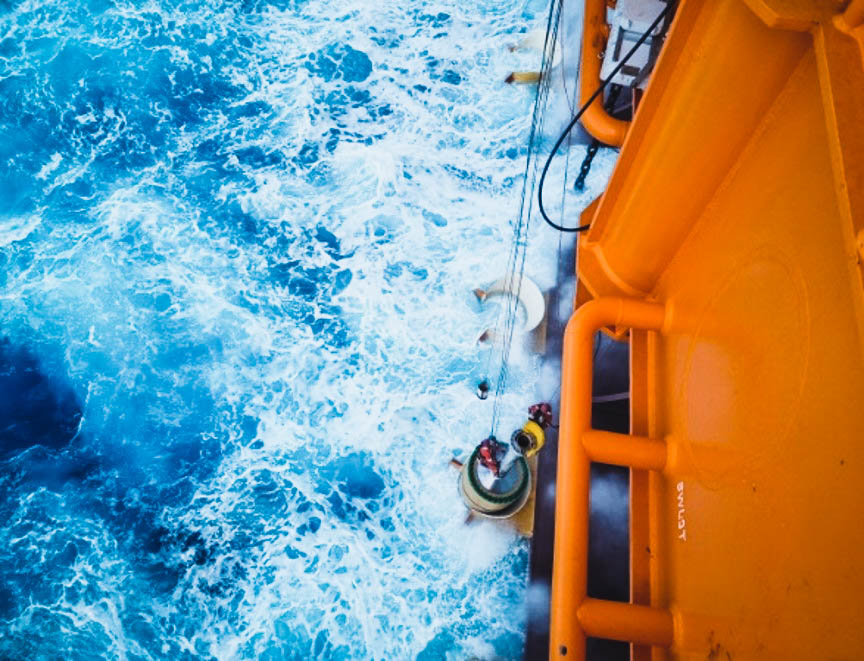
Last week, we assisted our client to install grating and grating support for the gap between the landing platforms. As the landing platforms are subjected to various loadings, helicopters landing on a floating vessel with changing vessel motion need complete safety measurements. Our team has ensured that we provide safe and quality services to our clients.
The history of bolts can be broken down into two parts. First, the threads date back to around 400 BC. They were made from wood. Most of the bolts are used on items such as a spiral for lifting water and pressing grapes to make wine.
In the 15th century, Johann Gutenberg used screws in the fastenings on his printing presses. The tendency to use screws gained momentum with their use being extended to items such as clocks and armor. According to Graves, Leonardo da Vinci’s notebooks from the late 15th and early 16th centuries include several designs for screw-cutting machines.
In 1841, Joseph Whitworth suggested standardizing the size of the screw threads in Britain so that all the nuts and bolts can fit globally. His proposal was that the angle of the thread flanks to be standardized at 55 degrees. At the same time, the number of threads per inch should be defined for various diameters.
Why is Bolt Tension Important to Offshore Industry?
Using a bolt tightening sequence is to reduce the loss of pre-load in the bolt. If the pre-load is lost, the bolt will relax. This could potentially lead to detrimental failure. The loss of preload can result from differences in thermal expansions between the bolt and the joint, along with other mechanisms.
Tension is a controlled way of tightening the bolt on applications within critical industries such as oil and gas, wind energy, construction and nuclear, etc. During bolt tensioning, the bolt is preloaded and stretched during the process. Once this has been completed correctly, with the nut tightened and the tensioner load removed, the bolt will automatically want to return to its original length. It is this spring-like action that creates tension and results in a clamping force across the bolted application.
Our team offered our bolt tightening services to our offshore client last week. By tensioning the bolts, we ensure that they enhance safety and ensure leak-free joints. Controlled bolting with tensioners reduces shutdown intervals. In this way, it improves the efficiency and productivity of the offshore asset.
Marine bumpers are used to prevent ships and other vessels from colliding against each other or against docks, wharves, and piers.
They are made of materials such as foam, rubber, or air-filled within special elastomeric substances. They act like spring storing and releasing energy and are able to cope with the extreme forces under variable conditions. Whether it’s naval vessels, small boats, large docks, or piers; marine bumpers form one of the key marine equipment for safe marine operations.
The port facilities have changed drastically in the past so does the ship with an increase in maritime traffic. Modern ships use fixed marine fenders installed on their hulls. It helps to protect them from hull damage in the event of contact with another ship or berth. Sea piers and docks also utilize dedicated fenders of their own to reduce impact forces at the time of docking.
How Marine Bumpers Are Used for Ship Berthing?
When a ship is to be brought at a negligible speed to the berth, a small increase in speed will give rise to an exponential jump in the momentum. It is the product of mass and velocity.
However, the speed always cannot be reduced to the bare minimum. Due to tides, wind effects, tugs, erratic pulls, engine failures, a good marine bumper can save the day in such exigencies. Ideally, a marine bumper should be cost-effective, with low maintenance cost and high durability.
How Marine Bumpers Are Used for Ship Berthing?
When a ship is to be brought at a negligible speed to the berth, a small increase in speed will give rise to an exponential jump in the momentum. It is the product of mass and velocity. For example, the displacement tonnage of 10,000 when multiplied by a speed of one knot has half the momentum when multiplied by a speed of two knots. The energy of the impact is twice, thrice, four times, and so on with every knot of increase of speed. However, the speed always cannot be restricted to the bare minimum, owing to certain conditions such as the tides, wind effects, tugs erratic pull, engine failures, etc. A good marine bumper can save the day in such exigencies. Ideally, a marine bumper should be cost-effective, with low maintenance cost and high durability. The material should be locally available should a case of replacement arise.
How do Marine Bumpers assist in our Marine Operations?
Most industries are now required to treat their wastewater on-site before it is discharged to a river or sewer (to meet a discharge consent limit). However, this treatment will vary depending on the contaminants present.
Wastewater treatment is the process of converting wastewater into water that can be discharged back into the environment. During our wastewater treatment for an offshore vessel last week in Guyana, our staff assist to install bumpers during the operation, which help to reduce the impact of contact with the vessel during our project.
Adopting the hooks enables organizations to put corporate safety policies into practice. It achieves the common goal of reducing risk and improving workplace safety.
Hooks, slings, and other lifting gear should not be loaded beyond their safe working loads. Strops and slings should be of sufficient size and length to enable them to be used safely and be so applied and pulled sufficiently tight to prevent the load or any part of the load from slipping and falling
What type of hooks are available?
Eye Hooks
On an eye hook, a chain or fittings are welded for a permanent connection to the sling. With an eye hook, you get far more flexibility movement, and ergonomics to position the hook and attach it to the load.
Clevis Hooks
A clevis fastener is a fastener system consisting of a clevis and clevis pin. The clevis is a U-shaped piece that has holes at the end of prongs to accept the clevis pin. The clevis pin is like a bolt but is only partially threaded or unthreaded with a cross-hole for a split pin
Swivel Hooks
There are two types of swivel hooks, and the user should be aware of the type of swivel hook that they’re using before lifting a load into the air:
Positioning Swivel Hook – This type of hook swivels to allow the rigger to properly align the hook during connection to the load. This type of hook is NOT designed to rotate while under load and is only to be used when you need to position the hook onto the pick point.
True Swivel Hook with Bearing – This type of swivel hook has a bearing inside that allows the hook to rotate freely under load. Top fitting swivels and pivots to allow the load to rotate to prevent twisting of the rigging.
How clevis hook improves our rigging activity for our recent offshore project?
A clevis hook refers to a hook with a U-shaped attachment point or coupling with holes to thread a pin through and assemble during rigging activity.
Our team of 10 people utilized clevis hook last month to lift a crane radiator for an offshore project in Guyana. Crane Radiator assists in increasing the capacity of the radiator and dissipating the heat from the engine.
After installing the crane radiator, we released the clevis hook with our certified rope access team.
A ship’s deck is used to transport many different types of cargo. It is installed from containers to large structures such as cranes or heavy modules of an offshore production plant. During transport, the ship confronts forces from the environment (wind, wave, current). Being on the ship’s deck, the cargo also encounters these forces. Cargoes must be stable while being subjected to these forces. They must be secured to the deck of the vessel using means such as lashing ropes, stoppers, beams, etc. This is called the “Sea-fastening” of cargo.
Sea fastening is the fastening of cargo while transportation at sea. When moving cargo by sea, it must be secured such that any movement which can damage cargo or ship must be avoided. Any major movement of cargo might result in instability problems. This might jeopardize vessels, cargo, and crew onboard.
Sea fastening of containers is done by stacking the containers in vertical guide rails. Another way is by stowing them in stacks or blocks, the containers being connected and fixed to parts of the vessel. The containers themselves are in a stack secured directly to the deck by bottom stackers or bottom twist locks.
How does ship travel on water affect cargo ship design?
There are various guidelines and standards which depend on the model and type of transport, yet most codes share the same tips when it comes to ensuring that the cargo is transported safely.
1. Heave
Heave is simply the vertical motion of the vessel moving up and down.
2. Surge
Surge is the linear longitudinal (front/back) motion. This causes the cargo to want to move to the front of the vessel and the rear of the vessel.
3. Sway
Sway, much like Heave, is a linear lateral (side-to-side) motion. This ignores any rotation of the vessel which we will cover later. This causes the cargo to want to move across the deck in the starboard direction.
4. Roll
The roll of a vessel is the rotation of an imaginary axis running horizontally along the ship’s length.
5. Pitch
The pitch of a vessel is the rotation of the axis running across the width. Pitch motion can be thought of as an up-or-down movement of the bow of the ship.
6. Yaw
Yaw rotation of the vessel on its vertical axis. This is the axis running vertically through the ship and through its center of gravity. Another way of thinking about yaw motion is the side-to-side movement of the bow of the ship.
What type of sea fastenings are available for cargo ships?
The heavier a cargo is, the stronger the acceleration forces will be. The position of the cargo on the vessel also affects the acceleration forces. It would be better to put the cargo on hold instead of on the deck or move it to a mid-ship position.
What happens if you plan for 2-meter-high waves, but then encounter 4-meter-high waves? Encountering a worse condition than what was expected is unlikely but is always a possibility. At the event, there is a bit of extra capacity for your lashing materials. Most surveyors look at the breaking point of the lashing material and divide that figure by 2.25 to get the Safe Working Load. This safety factor also accounts for any inconsistencies or impurities in the lashing material.
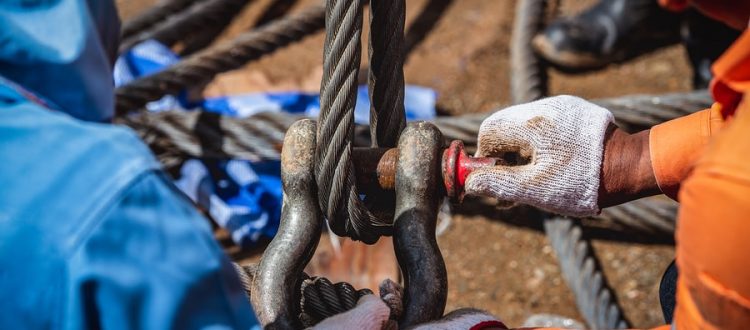
Lashing Materials such as chains, wire rope, or nylons are used to tighten the cargoes. The strongest material chains, which can last a long time. However, they come in fixed length, which provides fewer lashing options.
Wire rope is cheaper than chains and comes in a variety of sizes, making it more versatile than chains. You can cut the length you need from a spool of wire rope. However, wire rope is for one-time use and typically requires multiple personnel to make up the length and clamp down on the clips.
There have been written records of how ancient Hebrew and Egyptian civilizations developed the world’s earliest ladder and perfected it for various functions.
An 8000-year-old cave painting was found drawn during the Epipaleolithic period, which is located at Cuevas de la Araña, eastern Spain. It depicts two people using a thin grass-like ladder to collect honey from a bee’s nest.
Why is the boarding ladder important for the ship crew?
In the past, most of the ship crews used a flexible hanging ladder for access over the side of ships. It consists of vertical ropes or chains supporting horizontal, historically round, and wooden, rungs.
Currently, the boarding ladder is used in ports, at sea, or in anchorage to get crew onboard ships or vice-versa. It is hinged on a platform attached to the side of a ship and which can be positioned to provide access between ship and shore. According to the requirements for safely rigging vessel access equipment in SOLAS regulation, adequate lighting should be provided to illuminate the means of boarding ladders on both sides. At the same time, it shall be well-positioned and avoid the lower part of the ladder and gangway overhanging off steep ship sides.
How can ship crew maintain the boarding ladder for their own safety?
Ship crews should assign a team of people to be in charge of the boarding ladder and ensure that it is functioning. A normal regular check-up must be done.
They must ensure that the embarkation and disembarkation areas should be clear, and cargoes are not to be placed around the place.
A lifejacket and a safety harness must be put on a crew if he or she oversees stowing the boarding ladder.
The ideal hull on a ship would be a hollow, watertight chamber. At the same time, it can provide access. They were originally fitted with cargo hatch covers consisting of wooden hatch boards. Steel beams will be fitted in to support the hatch opening.
In sailing vessels, the cargo hatches used to be small to preserve the integrity of the hull. Decks are often awash during ocean passages and the smaller the opening, the smaller the risk of flooding the holds.
Bigger ships and smaller crews led to the invention of the mechanically folding steel hatch cover. This is commonly known as MacGregor hatches. It consists of interlocking steel panels with rubber packing fitted inside the edges of the steel panels. A steel compression bar will be fitted onto the hatch coaming. In this way, the ship is deemed to be cargo-worthy by achieving its weathertight conditions.
Why hatch cover leak and what can it lead to?
Hatches leak for a variety of reasons, but mainly because of poor maintenance or failure to close them properly. When hatch covers show signs of leaking, the rubber gaskets are the first to gain attention. Ship crews may be able to change the gaskets themselves. However, some owners limit hatch cover attention to replacing the gaskets when worn out. In doing so, they miss out on many of the finer points of hatch cover maintenance.
Most hatch covers have movable parts like hinges, hydraulic cylinders, wheels, etc are all exposed to wear and tear over time and have an influence on how well the hatch covers work. At the same time, corrosion and physical wear of fixed parts of hatch coamings, hatch panels, storage racks, etc., may lead to leaking hatch covers.
Leaking hatch cover could lead to more serious consequences than wet cargo. This includes flooding, accelerated corrosion, or even loss of the ship. It is crucial for safety at sea and protection of the environment to maintain hatch cover weather-tightness and strength. The lack of hatch cover maintenance for hatch covers has shown to be the primary cause of water ingress into the cargo holds. Thus, this is how it leads to cargo damage.
Shipowners are obligated to deliver the cargo in the same condition as it was loaded onboard upon a contract of carriage of goods by sea. Cargo, which has been wet by seawater, will result in financial loss. Recovery claims will be filed against the shipowner carrier by the Cargo consignees and their cargo insurers. These claims can be very substantial depending upon the nature of the cargo and the amount of water ingress.
What is the test taken to check for hatch cover Watertight Integrity?
1) Hose Tests
The ability of the most used hatch covers to prevent water ingress depends upon the existence of a watertight seal between sections of rubber packing and steel compression bars.
The hose test involves playing a jet of water along the cross joints and perimeter seals of the hatch cover at a certain minimum pressure and distance from the structure. It requires a minimum of two people to carry it out. One to operate the hose and one to observe from within the hold to see whether water is gaining access.
2) Ultrasonic Tests
The use of ultrasonic equipment is a modern, viable means of testing for watertight integrity of hatch covers, access hatches, doors, ventilators, etc. It is preferable to use Class-approved equipment operated by qualified personnel and to follow approved test procedures.
The test involves placing an electronic signal generator within the cargo hold (laden or not) and using the receiving sensor to first take a reading at the access or booby hatch with the main hatch cover closed.
What are the basic procedures to maintain hatch cover for offshore assets?
Only qualified personnel should operate the hatch covers. They should be well-trained and be fully aware of the manufacturer’s procedures for the safe operation of the hatch covers. A proper risk assessment needs to be carried out and this needs to be reviewed regularly and ship crews are briefed and trained.
Special care and attention should be paid to the opening and closing of the hatch covers when the ship has an excessive trim or list. This is due to the possibility of the covers “running away” when in motion.
It is not recommended to open the hatch covers whilst at sea to carry out maintenance and repairs but there will be times when it is necessary. In such cases, it must be carefully considered, considering crew safety and the anticipated weather and sea conditions. It may be necessary to take extra measures to secure the hatch covers in the open position to prevent them from moving when the ship is moving.
In the 19th century, ships sailed from there all over the world. Rigging was part of the overall strength of the ship when a rigger was a person working with ropes to hoist the sail.
In an era before mechanical haulage, cranes, ropes, pulleys, and muscle power were all that were available to move heavy objects. The rigger is a skilled tradesperson who specializes in the assistance of manual mechanical advantage devices. It comprises a pulley, block, and tackle or motorized such as a crane or derrick or chain hoists (chain fall) or capstan winch.
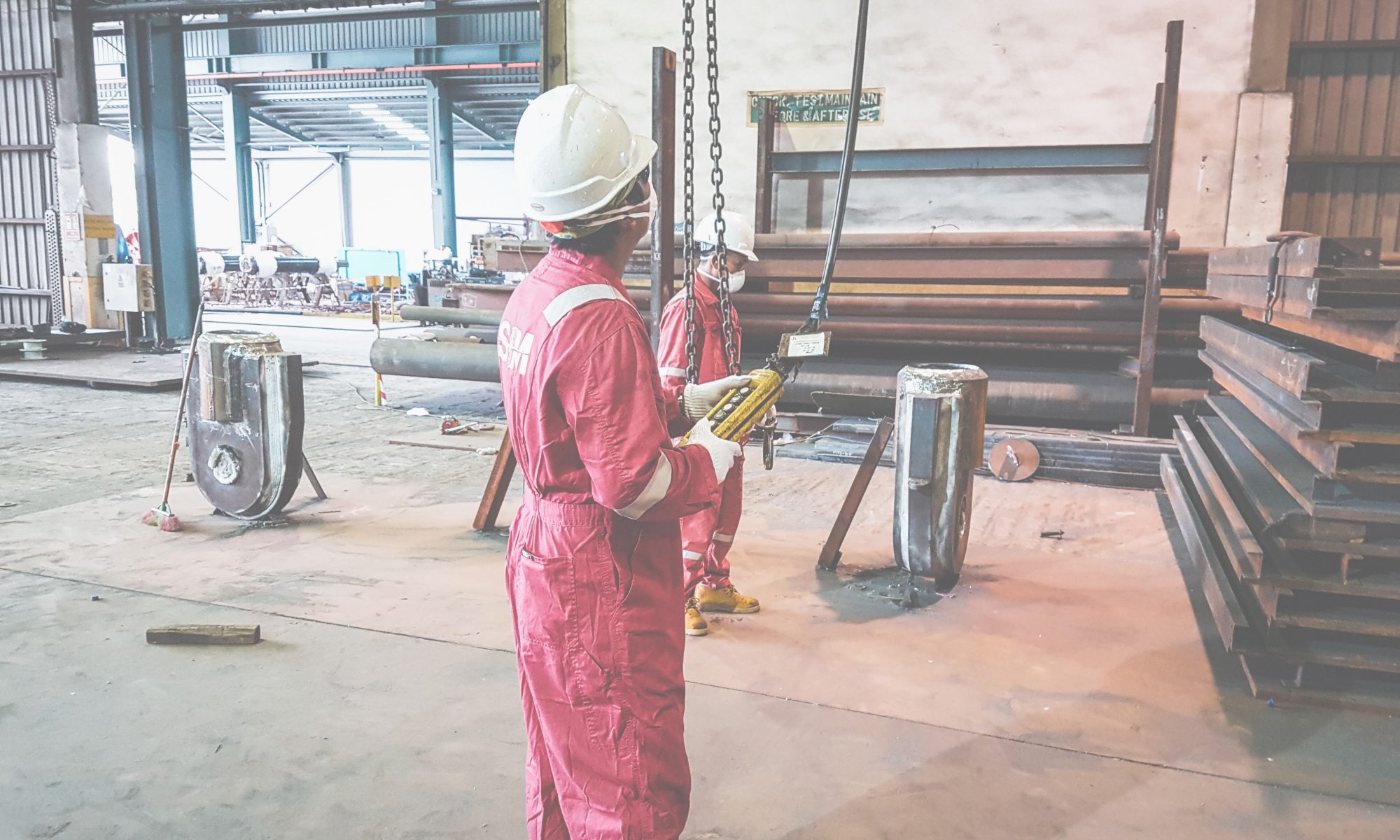
Riggers attach loads of equipment to cranes or structures using shackles, cables, chains, clamps, or straps, employing pulleys, winches, lifts, or chain hoists (aka chain motors). Quick load calculations are necessary for each load and engineering principles are always in play. Riggers use various suspension techniques to get their load around obstacles on a construction site, loading dock, or event site to the desired location and height.
What is the role of Deck Riggers developed for Marine Offshore operations?
Deck Riggers are responsible for the lifting and moving of heavy and bulky objects, whether aboard ships or around the shipyard. They must develop a working knowledge of selecting and using the various rigging hardware, such as ropes, slings, shackles, clamps, chain falls, and come-a-longs. The rigger apprentice is trained on the proper hand signals involved in heavy lifts. Riggers must also be able to calculate the weight factors and angles used in the proper lifting and transferring of those heavy loads. They are responsible for installing the safety nets, anchor chains, and mooring ropes on board the ships and for line handling of the cables and ropes when docking or undocking the ships.
Deck Riggers is critical to successfully lifting operations for offshore operations. They know which hitches need to be tied and how much weight they can support. They need to understand how the center of gravity will affect a load’s balance and stability as well as how to find the center of balance.
Equipment that is commonly used in rigging includes slings, chokers, shackles, and winches. Through their competent usage, riggers enable heavy equipment to move through confined spaces as well as to tilt, turn or dip loads to avoid any environmental hazards.
Safety is of the utmost importance. This is especially so when heavy objects are being lifted by heavy equipment.
Lionel Lukin, a London coachbuilder, paved the way for the first purpose-built lifeboat. He designed the world’s first unsinkable boat and patented it on 2 November 1785.
In 1784, he began experimenting with a Norwegian yawl, a type of sailing boat, to test his ‘unmergeable’ design. Lukin incorporated pockets of air into watertight bulkheads (compartments). At the same time, he added buoyant gunwales (top sides of the boat) and used cork and other lightweight materials in the structure. He also included a false iron keel for extra weight to help keep the boat upright.
On January 29, 1790, Henry Greathead built the first boat specialized as a lifeboat, which was tested on the River Tyne in England. The design won a competition organized by the private Law House committee. But William Wouldhave and Lionel Lukin both claimed to be the inventors of the first lifeboat. Greathead’s boat.
The first self-righting design was developed by William Wouldhave. Self-righting designs were not deployed until the 1840s.
What is SOLAS and how does it improve on lifeboat design?
The International Convention for the Safety of Life at Sea (SOLAS) is an international maritime treaty. It establishes the least safety measures in the construction, equipment, and operation of merchant ships.
IMO SOLAS 74, the last adopted revised convention of 1974, includes a number of regulations under different SOLAS chapters. It deals with safety precautions and safety procedures starting from the construction of the ship to real emergencies like – “Abandon Ship”. The convention is updated to meet the safety norms in the modern shipping industry from time to time.
Regulation 12 addresses the location of survival craft on a cargo ship (other than free-fall lifeboat). Regulation 13 to Regulation 17 details the stowage and necessary arrangements required for the lifeboat, life raft, marine evacuation system, recovery boat on the ship, and Man Overboard Operation.
Types of Lifeboats Used on Modern Ships
1) Open Lifeboat
As the name suggests, the open lifeboat has no roof and is normally propelled by manual power by using hand-propelled ores. Compression ignition engines may also be provided for propulsion purposes. However, open lifeboats are becoming obsolete now because of stringent safety norms, but one may find them on an older ship.
2) Closed lifeboat
Closed lifeboats are the most popular lifeboats that are used on ships. They are enclosed which saves the crew from seawater, strong wind, and rough weather. Moreover, watertight integrity is higher in this type of lifeboat and it can also get upright on its own if toppled over by waves.
The lifeboat can also be used as a SOLAS-approved rescue boat* by enhancing the launch and recovery operations.
3) Free fall lifeboat
A freefall lifeboat is similar to an enclosed lifeboat but the process of launching it is entirely different. They are aerodynamic in nature and thus the boat can penetrate the water without damaging the body when launched from the ship.
How do lifeboats become vital to offshore assets?
Emergency evacuations from an offshore facility can arise due to many causes and under a range of diverse and dangerous circumstances, not all of which can be seen before. A key objective is to avoid significant incidents escalating into major incidents. To achieve this goal, emergency evacuations require integrated, cross-discipline coordination and a portfolio of evacuation options.
Lifeboats are designed so that personnel may safely and efficiently abandon a ship or offshore facility in the case of an extreme or imminent disaster. Emergency evacuation from an oil and gas rig is primarily via a davit or free-fall lifeboat. However, in order to make provisions for personnel who cannot access the lifeboats during an emergency, an alternative means of evacuation is traditionally provided. Injuries and fatalities associated with traditional means of secondary evacuation have seen a rapid increase over the years, due to significantly higher elevations of oil and gas facility decks (80-120ft).
The rope has been used since prehistoric times. It is used throughout construction, seafaring, exploration, sports, theatre, and communications. Many types of knots have been developed to fasten with rope, join ropes, and utilize rope to generate mechanical advantage. Pulleys can redirect the pulling force of a rope in another direction, multiply its lifting or pulling power, and distribute a load over multiple parts of the same rope to increase safety and decrease wear.
The ancient Egyptians were the first civilization to develop special tools to make rope. Egyptian rope dates to 4000 – 3500 BC and was generally made of water reed fibers. Other ropes in antiquity were made from fibers of date palms, flax, grass, papyrus, leather, or animal hair. The use of such ropes pulled by thousands of workers allowed the Egyptians to move the heavy stones required to build their monuments.
How Industrial Rope Access Trade Association (IRATA) formed?
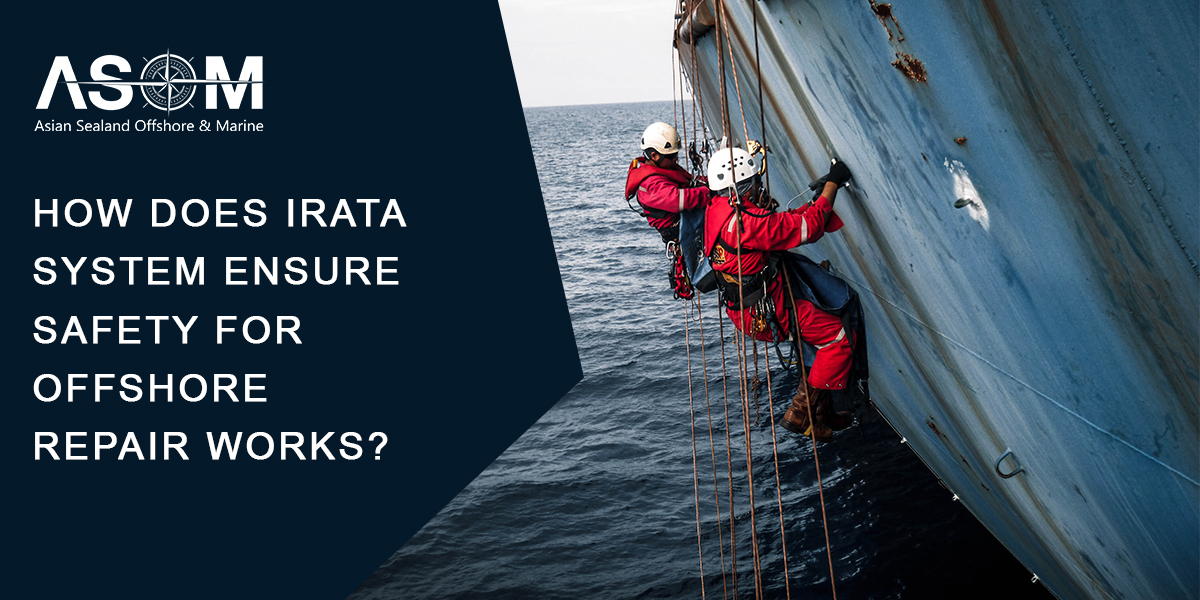
IRATA was formed in the UK in the late 1980s. It was set up to solve maintenance challenges in the offshore oil and gas industry. Its formation was the result of an initiative of several leading companies, who had begun to use industrial rope access techniques, to provide a safe working environment for the industry.
The IRATA two-rope, fail-to-safe technique developed by IRATA is used in a wide range of repair, maintenance, inspection, and access work. Rope access methodology boasts an unrivaled safety record, short set-up and dismantling time, positive environmental benefits, and removes the need for invasive access equipment or disruption to a worksite.
What is the future of rope access?
With the rising demand for natural energy, wind turbines are being installed around the world. Thus, Rope access workers are in demand as they will be required to work in the high element of the wind turbines. Work such as repairing the spinner requires rope access knowledge.
Legislation in health and safety and working at height are far stricter than in previous years. If a company fails to follow safety rules, it could tar its reputation. Seeking professional help from a qualified work-at-height company with a proven safety record will mitigate any potential safety risks.











;?>/images/phone_icon.png) +65 6966 6027
+65 6966 6027;?>/images/fax.png) +65 6966 0437
+65 6966 0437;?>/images/message.png)
