
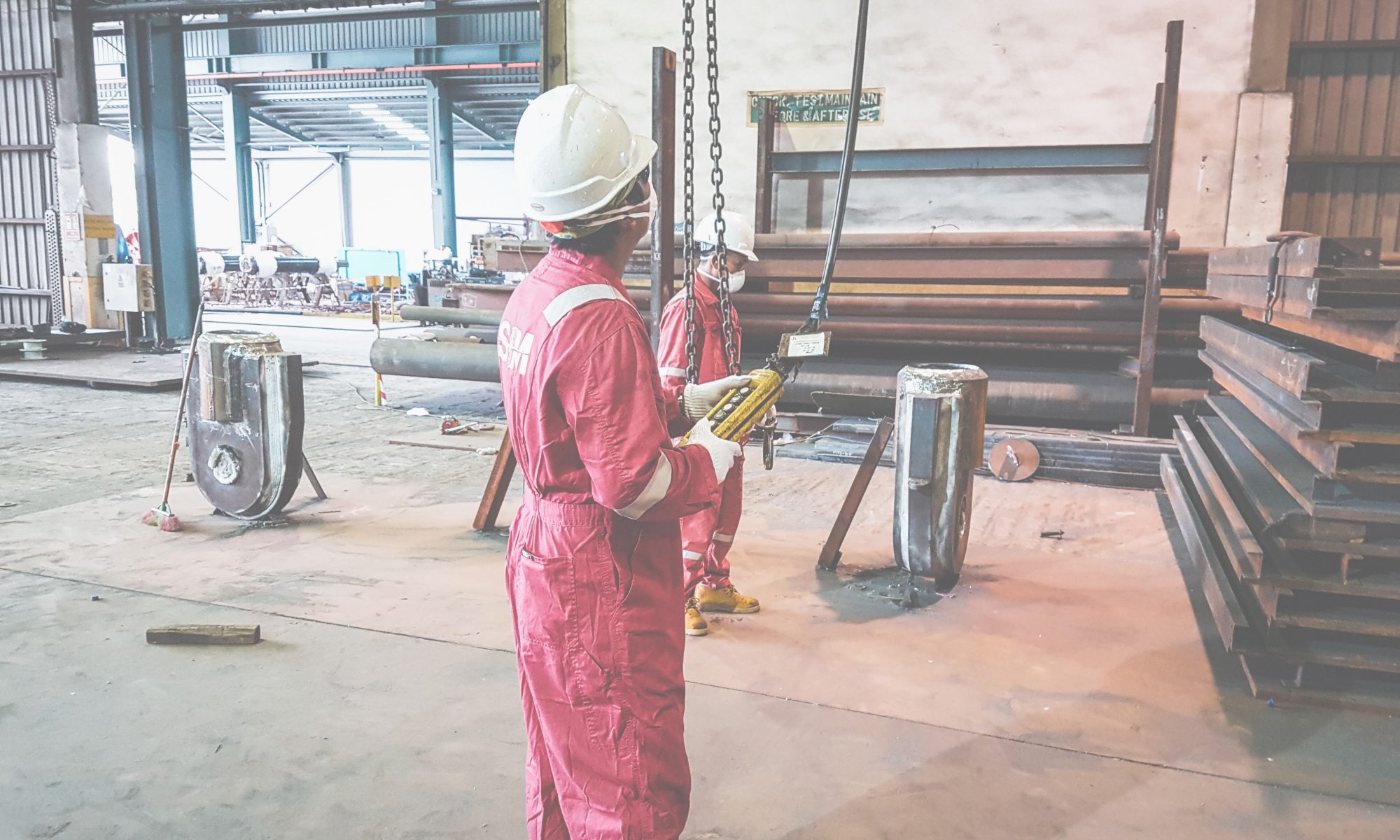
What Is The Role Of Deck Riggers Developed For Marine Offshore Operations?

History of Riggers

In the 19th century, ships sailed from there all over the world. Rigging was part of the overall strength of the ship when a rigger was a person working with ropes to hoist the sail.

In an era before mechanical haulage, cranes, ropes, pulleys, and muscle power were all that were available to move heavy objects. The rigger is a skilled tradesperson who specializes in the assistance of manual mechanical advantage devices. It comprises a pulley, block, and tackle or motorized such as a crane or derrick or chain hoists (chain fall) or capstan winch.

Riggers attach loads of equipment to cranes or structures using shackles, cables, chains, clamps, or straps, employing pulleys, winches, lifts, or chain hoists (aka chain motors). Quick load calculations are necessary for each load and engineering principles are always in play. Riggers use various suspension techniques to get their load around obstacles on a construction site, loading dock, or event site to the desired location and height.

What is the role of Deck Riggers developed for Marine Offshore operations?
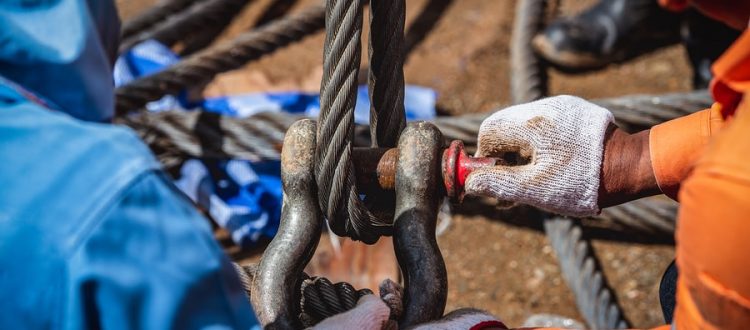
Deck Riggers are responsible for the lifting and moving of heavy and bulky objects, whether aboard ships or around the shipyard. They must develop a working knowledge of selecting and using the various rigging hardware, such as ropes, slings, shackles, clamps, chain falls, and come-a-longs. The rigger apprentice is trained on the proper hand signals involved in heavy lifts. Riggers must also be able to calculate the weight factors and angles used in the proper lifting and transferring of those heavy loads. They are responsible for installing the safety nets, anchor chains, and mooring ropes on board the ships and for line handling of the cables and ropes when docking or undocking the ships.

Deck Riggers is critical to successfully lifting operations for offshore operations. They know which hitches need to be tied and how much weight they can support. They need to understand how the center of gravity will affect a load’s balance and stability as well as how to find the center of balance.

Equipment that is commonly used in rigging includes slings, chokers, shackles, and winches. Through their competent usage, riggers enable heavy equipment to move through confined spaces as well as to tilt, turn or dip loads to avoid any environmental hazards.

Safety is of the utmost importance. This is especially so when heavy objects are being lifted by heavy equipment.

History Of Lifeboats And Why They Are Important To The Offshore Industry?

The origin of lifeboat

Lionel Lukin, a London coachbuilder, paved the way for the first purpose-built lifeboat. He designed the world’s first unsinkable boat and patented it on 2 November 1785.

In 1784, he began experimenting with a Norwegian yawl, a type of sailing boat, to test his ‘unmergeable’ design. Lukin incorporated pockets of air into watertight bulkheads (compartments). At the same time, he added buoyant gunwales (top sides of the boat) and used cork and other lightweight materials in the structure. He also included a false iron keel for extra weight to help keep the boat upright.

On January 29, 1790, Henry Greathead built the first boat specialized as a lifeboat, which was tested on the River Tyne in England. The design won a competition organized by the private Law House committee. But William Wouldhave and Lionel Lukin both claimed to be the inventors of the first lifeboat. Greathead’s boat.

The first self-righting design was developed by William Wouldhave. Self-righting designs were not deployed until the 1840s.

What is SOLAS and how does it improve on lifeboat design?

The International Convention for the Safety of Life at Sea (SOLAS) is an international maritime treaty. It establishes the least safety measures in the construction, equipment, and operation of merchant ships.

IMO SOLAS 74, the last adopted revised convention of 1974, includes a number of regulations under different SOLAS chapters. It deals with safety precautions and safety procedures starting from the construction of the ship to real emergencies like – “Abandon Ship”. The convention is updated to meet the safety norms in the modern shipping industry from time to time.

Regulation 12 addresses the location of survival craft on a cargo ship (other than free-fall lifeboat). Regulation 13 to Regulation 17 details the stowage and necessary arrangements required for the lifeboat, life raft, marine evacuation system, recovery boat on the ship, and Man Overboard Operation.

Types of Lifeboats Used on Modern Ships

1) Open Lifeboat

As the name suggests, the open lifeboat has no roof and is normally propelled by manual power by using hand-propelled ores. Compression ignition engines may also be provided for propulsion purposes. However, open lifeboats are becoming obsolete now because of stringent safety norms, but one may find them on an older ship.

2) Closed lifeboat

Closed lifeboats are the most popular lifeboats that are used on ships. They are enclosed which saves the crew from seawater, strong wind, and rough weather. Moreover, watertight integrity is higher in this type of lifeboat and it can also get upright on its own if toppled over by waves.

The lifeboat can also be used as a SOLAS-approved rescue boat* by enhancing the launch and recovery operations.

3) Free fall lifeboat

A freefall lifeboat is similar to an enclosed lifeboat but the process of launching it is entirely different. They are aerodynamic in nature and thus the boat can penetrate the water without damaging the body when launched from the ship.

How do lifeboats become vital to offshore assets?

Emergency evacuations from an offshore facility can arise due to many causes and under a range of diverse and dangerous circumstances, not all of which can be seen before. A key objective is to avoid significant incidents escalating into major incidents. To achieve this goal, emergency evacuations require integrated, cross-discipline coordination and a portfolio of evacuation options.

Lifeboats are designed so that personnel may safely and efficiently abandon a ship or offshore facility in the case of an extreme or imminent disaster. Emergency evacuation from an oil and gas rig is primarily via a davit or free-fall lifeboat. However, in order to make provisions for personnel who cannot access the lifeboats during an emergency, an alternative means of evacuation is traditionally provided. Injuries and fatalities associated with traditional means of secondary evacuation have seen a rapid increase over the years, due to significantly higher elevations of oil and gas facility decks (80-120ft).