
History Of The IRATA System And How It Helps To Ensure Safety For Offshore Repair Works?

History Of Rope Work

The rope has been used since prehistoric times. It is used throughout construction, seafaring, exploration, sports, theatre, and communications. Many types of knots have been developed to fasten with rope, join ropes, and utilize rope to generate mechanical advantage. Pulleys can redirect the pulling force of a rope in another direction, multiply its lifting or pulling power, and distribute a load over multiple parts of the same rope to increase safety and decrease wear.

The ancient Egyptians were the first civilization to develop special tools to make rope. Egyptian rope dates to 4000 – 3500 BC and was generally made of water reed fibers. Other ropes in antiquity were made from fibers of date palms, flax, grass, papyrus, leather, or animal hair. The use of such ropes pulled by thousands of workers allowed the Egyptians to move the heavy stones required to build their monuments.

How Industrial Rope Access Trade Association (IRATA) formed?

IRATA was formed in the UK in the late 1980s. It was set up to solve maintenance challenges in the offshore oil and gas industry. Its formation was the result of an initiative of several leading companies, who had begun to use industrial rope access techniques, to provide a safe working environment for the industry.

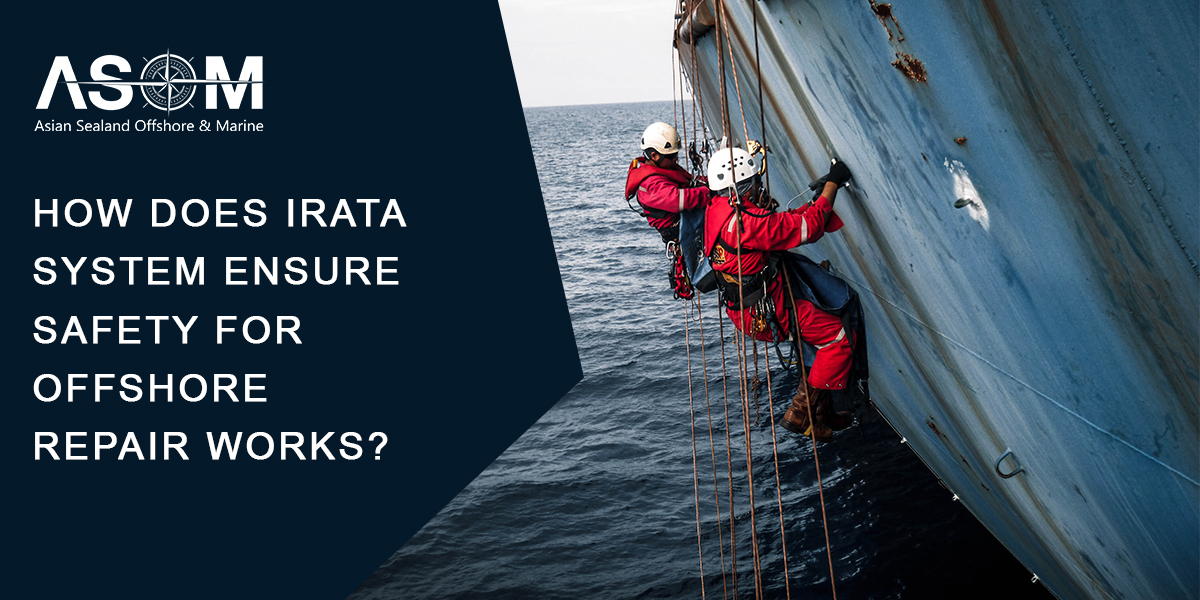
The IRATA two-rope, fail-to-safe technique developed by IRATA is used in a wide range of repair, maintenance, inspection, and access work. Rope access methodology boasts an unrivaled safety record, short set-up and dismantling time, positive environmental benefits, and removes the need for invasive access equipment or disruption to a worksite.

What is the future of rope access?

With the rising demand for natural energy, wind turbines are being installed around the world. Thus, Rope access workers are in demand as they will be required to work in the high element of the wind turbines. Work such as repairing the spinner requires rope access knowledge. 

Legislation in health and safety and working at height are far stricter than in previous years. If a company fails to follow safety rules, it could tar its reputation. Seeking professional help from a qualified work-at-height company with a proven safety record will mitigate any potential safety risks.

History Of Water Ballast Tank And Why Is Ballast Water Treatment Important?

History of ballast on vessels

In the earlier times, solid ballast such as sandbags, rocks, iron blocks were used to load onto the vessels once the cargo loading was completed. This method helped to maintain the stability of the ship and its seaworthiness. In the nineteenth century, cargo boats returning from Europe to North America would carry quarried stone as ballast. They contribute to the architectural heritage of some east coast cities (for example Montreal), where this stone was used in building.

As soon steam-powered ships appeared during the modern industrial revolution, their design changed to a metal-hulled type. They started to carry water for the steam machine but also developed the use of water as stabilization ballast.

Today cargo vessels, such as tankers, bulk carriers, or container ships carry liquid ballast. It includes freshwater, saltwater, or brackish water in various ballast tanks. If the cargo vessel wishes to travel empty or partially empty to collect cargo, it must travel in ballast. It keeps the vessel in trim and keeps the propeller and rudder submerged. Typically, being “in ballast” will mean flooding the ballast tanks with seawater as ships get bigger in size. The cargo carried by the vessels varies from one port to another. Water ballast tanks are used to compensate for maintaining the trim and stability of the vessel for a safe sea passage.

Why is ballast water an issue?

The process of loading and unloading untreated ballast water poses a major threat to the environment. Ships become a medium for the transfer of organisms between ecosystems from one part of the world to another.

When ballast water is pumped into a ship many microscopic organisms and sediments can be introduced into a ship’s ballast tanks. These organisms include bacteria, microbes, small invertebrates, eggs, cysts, and larvae of various species. Many of these organisms can survive in a ship’s ballast tanks. When the ballast water is discharged, the organisms are released into new environments. If suitable conditions exist in the new environment into which they are released, these species can survive, reproduce, and become aquatic invasive species.

How ballast water treatment solve invasive species issues?

Ballast water treatment systems are used to maintain the balance of the marine ecosystem by filtering and disinfecting ballast water. Several technologies are used in ballast water treatment systems to avoid polluting seawater. As time has passed, companies are favoring chemical-free ways of treating ballast water. Thus, physical treatment is gaining importance.

The International Marine Organization (IMO) has imposed strict regulations to check potential harm to seawater. By checking on foreign toxic species such as pathogens, these regulations and their strict enforcement are making owners install ballast water treatment systems on ships.

A number of factors are taken into account for choosing a ballast water treatment system for a ship.

Some of the main factors taken into consideration are 

  • 1) Effectiveness of ballast water organisms
  • 2) Environment-friendliness
  • 3) Safety of the crew
  • 4) Cost-effectiveness
  • 5) Ease of installation and operation
  • 6) Space availability on board

History Of Galley And Why Is It Important For The Ship Crew

Back in the day, ships were made of wood. Cooking on board was a fire hazard. Therefore, a smaller structure called Galley was formed to ensure crew safety on the ship. Working on labor-intensive sailing ships meant crews burned more than 4,000 calories a day. Journals from 1943 show that British naval officers had the option to undertake a six-week cookery course during the height of World War Two. They can learn to prepare dishes as diverse as beef casserole and steamed pudding.

Food was also important from a crew health standpoint. If the crew is not feeling well, they will be unable to perform their assigned duties. For a healthy, contented crew, a ship needs to equip with a galley, thoughtful chefs, good storage, and refrigeration facilities.

A galley is usually laid out in an efficient typical style with longitudinal units and overhead cabinets. This makes the best use of the usually limited space aboard ships. It also caters to the rolling and heaving nature of ships, making them more resistant to the effects of the movement of the ship. Equipment such as strengthened materials, boltable feet for deck attachment, rolling racks, and storm rails, and guide rails are made for the marine environment.

For this reason, galley stoves are often gimballed, so that the liquid in pans does not spill out. They are also commonly equipped with bars, preventing the cook from falling against the hot stove. Hot and cold food preparation lines consist of modular systems in different executions and standards. Modular galley systems ensure user-friendly, hygienic, compact, and flexible working spaces with high quality and capacity, but without unnecessary intermediate spaces.

Maritime Labour Convention law stipulates that there must be access to clean drinking water and that the food served should take into account cultural and religious sensitivities. Maintaining a healthy diet for the ship crew with good hygiene helps to prevent diseases and improve overall health.